
Three Weeks to Table: Our First Spring Feast!
How we survived the "Great Snail Attack" and learned the art of the compost

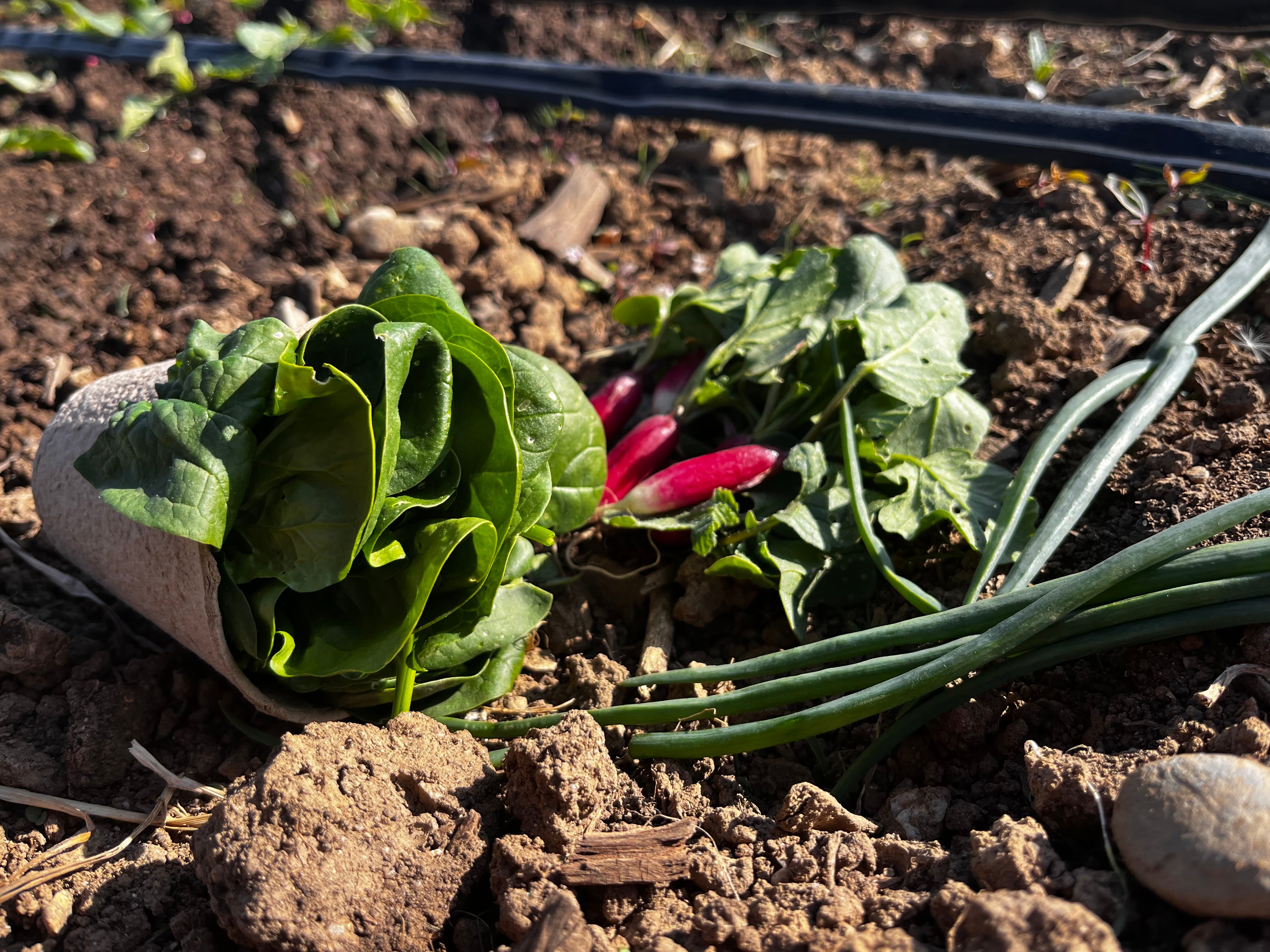
Just look at it! Radishes, spinach, and onion stems—all green, healthy, and ready for the table. Which is exactly what we did with them! Pickled radishes and a small spinach-and-onion-stem salad (dressed with a touch of wine vinegar and olive oil) accompanied our dinner of rice noodles and nettle pesto. What a healthy, well-deserved feast. We all felt very happy—especially me! There is something magical about eating your own vegetables rather than the ones you find in the supermarket. And it only took about 3 weeks for the radishes to reach our table! I had no idea they were so fast. Google told me, but I didn’t truly expect it!
Pickling Tip: Did you know you can pickle the stems, too? When radishes are this young, the whole plant is delicious and super healthy.
Spinach Secrets
That delicious salad wasn’t just luck; it was a lesson in survival! Last season, I harvested—counting precisely—0 grams of spinach. I was heartbroken.
It turns out, I was missing the two “Golden Rules” that Pierre, our gardener, later shared with me.
First: A lot of water. It needs a proper drink every 1–2 days or it just gives up.
Second: Gentle, regular trimming. If you don’t harvest the leaves, the plant stops producing new ones!
Now that I’m sharing these secrets with you, maybe we can all avoid the “Zero Gram Season.” ;)
Radish vs. Radish: The Battle Continues
Which batch do you think won the race: the modern hills or the old-fashioned flat rows?
The old-fashioned flat ones! Even though their leaves were smaller and more “bitten” by flies, they produced bigger vegetables faster.
However, the “modern” radishes seem stronger and have bigger leaves. I still think they are the winners so far, even if they lost the “gold medal” for being eaten first.
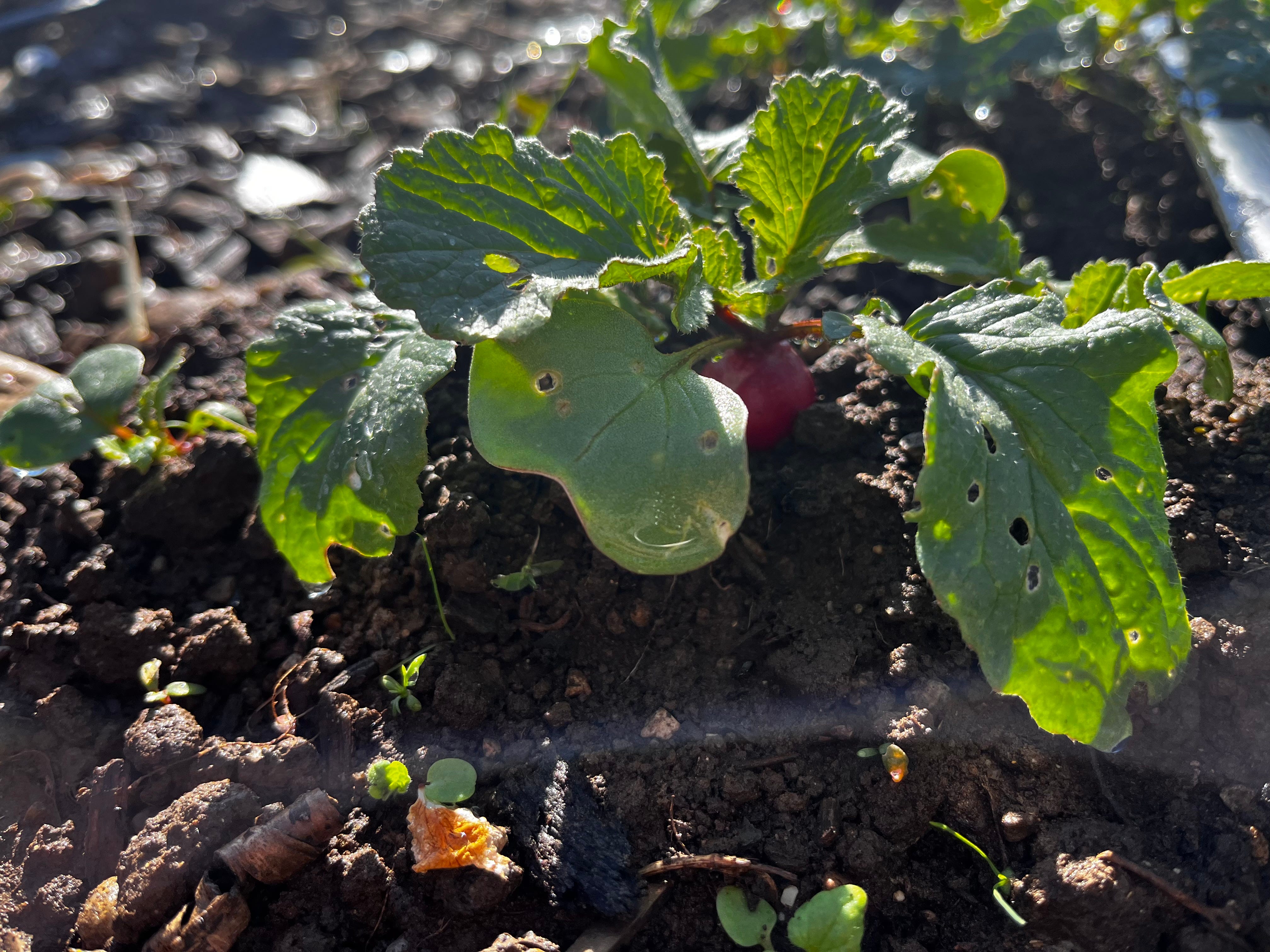
... I forgot one 'small' fact—as you may have realized in the pictures! These radishes aren't just planted differently; they are actually different radish varieties. Silly me! The old-fashioned ones are the long type, while the 'modern' ones are round. That definitely messes with my scientific results, but we can still judge the winner based on their leaf strength and overall health!
The Snail Siege: Seedling Survival
Moving from the harvest back to the nursery... do you remember the seedlings we moved to their new home two weeks ago?
These first two weeks were rough for them. Even though I made adjustments to fight the snails, it wasn’t enough. After just few days I discovered that something was eating my Kohlrabi, and tiny holes were appearing in the Pak Choi.
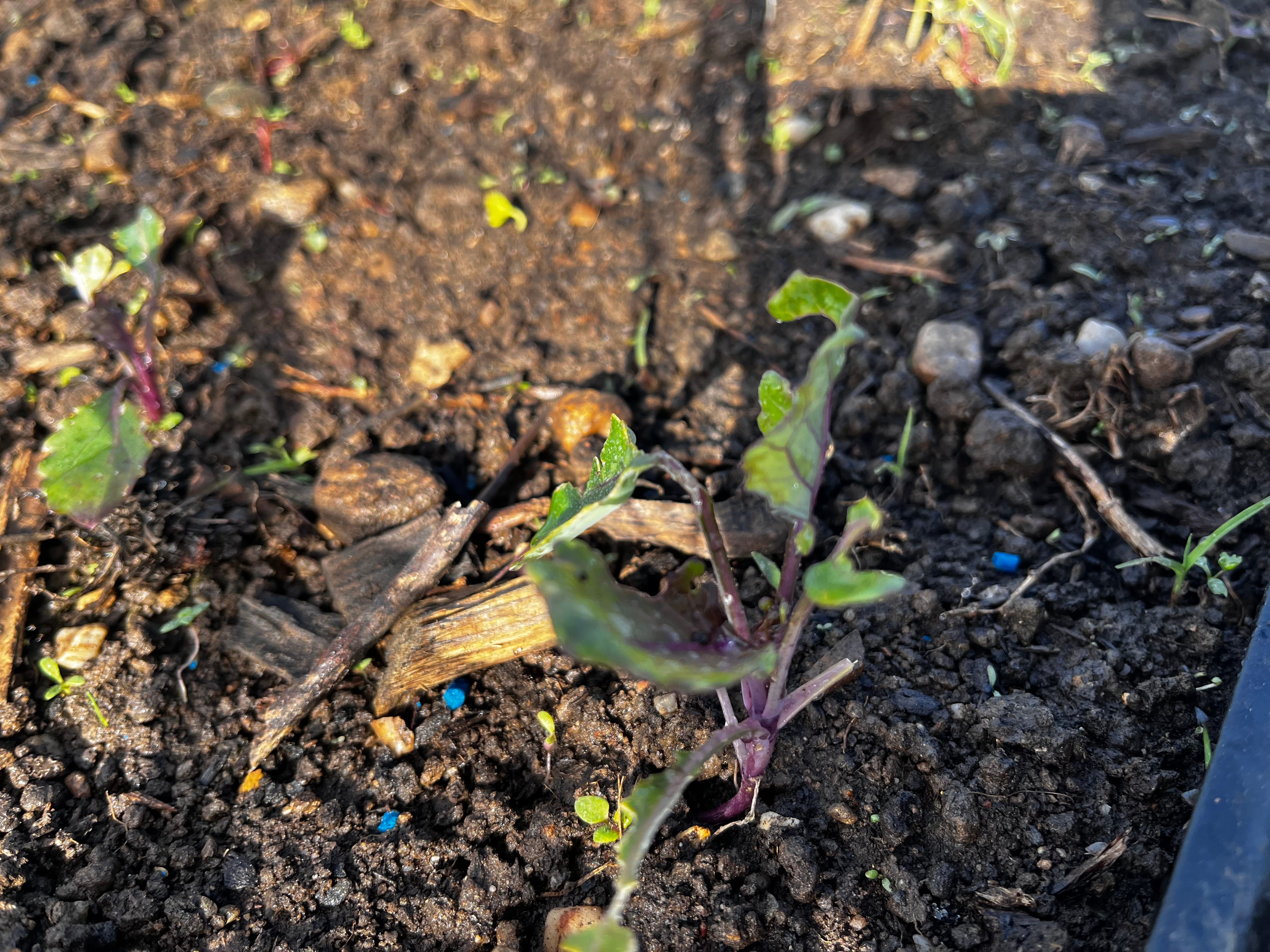
I was devastated but not desperate!
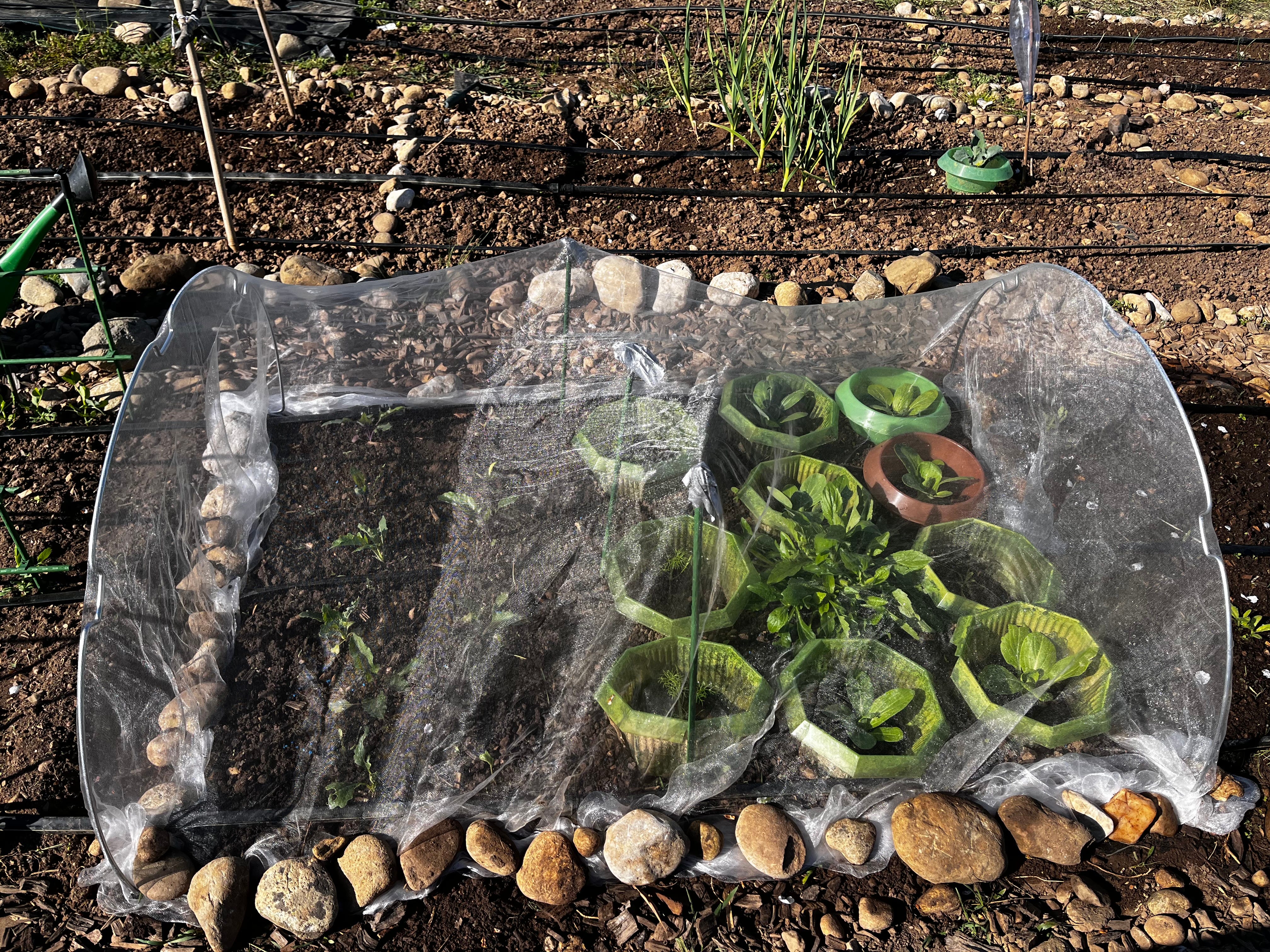
Step 1: I added an insect net and “Bleu” (slug pellets/protection).
Result: Two days later, more plants were eaten.
Luckily, the Sunday was approaching and with it, Pierre, the gardener, arrived. I dragged him from his strawberry plot for advice. His verdict: “Bio gardening is always about losing something to feed other animals!” But he showed me the holes in my net and taught me a trick: Water the plants directly before putting the net on to avoid trapping flies inside. The most disgusting part? I found snails hidden right next to the roots, inside the “protection!”
And so, I re-implemented everything. Today, finally, there is improvement. 6 out of 8 Pak Choi survived and are growing nicely, the fennel is great, and 8 out of 12 Kohlrabi are gaining strength. Cross your fingers for these little fighters!
Beetroots: The Unexpected Comeback
Imagine—the beetroots survived and are thriving! Nothing is eating them, and they are happily growing. Pierre’s only advice was to water them as much as the spinach. No secret weapon, just H2O. Bizarre, isn’t it?
The Best for Last: Compost School
One of a gardener’s best friends is compost. Working with rich, airy compost is so much better than the heavy soil in the plot and I brought many wheelbarrows of it preparing my plot a few weeks ago.
This Sunday, I volunteered to help make the compost for next season. Did you know you can’t just throw rotten plants on a pile? You have to rotate it, water it, cover it, and—most importantly—keep it on a base so the nutrients don’t wash away into the ground before they reach your plot!
We’ve learned so much, and there is definitely more to come this season!